Simple Disinfectant
Its an easy thing to ignore but many conventional disinfectant sprays are loaded with harsh ingredients that can be harmful to us—and we breathe them in all the time. Beyond causing skin and eye irritation, some are even linked to cancer. Finding out that professional cleaners have a higher risk of respiratory disease than the average person was a trigger for me to start making changes to my cleaning products.
One of the very first things I swapped out was my everyday surface cleaner (the one I reach for to tackle kitchen spills, bathroom counters, and dirty doorknobs). Once I started using this recipe, I never looked back, and I think you’re going to love it just as much as I do!
Why you’ll love this disinfectant
You’ll love this cleaner because it’s gentler on your skin and air quality than most conventional options. Plus, it helps eliminate single-use plastic bottles! You likely have most of these ingredients on hand already, making it easy to whip up in a pinch if you run out. Best of all, you can completely customize the scent—perfect if you or someone in your house is sensitive to strong smells.
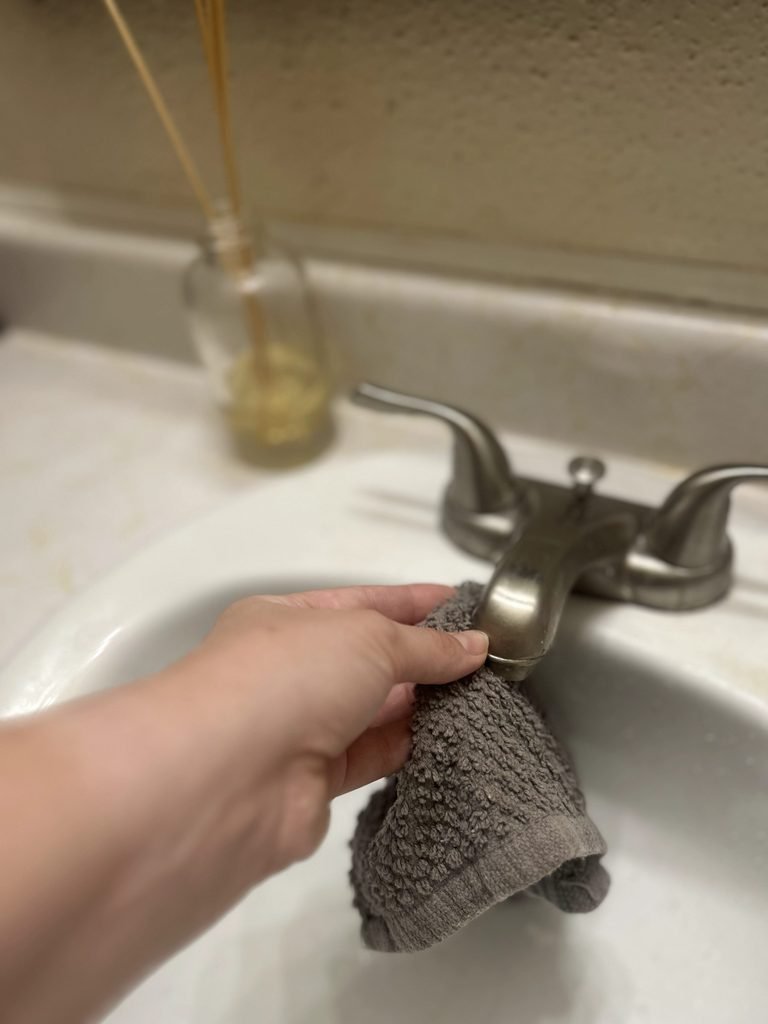
A simple DIY disinfectant spray
It is important that the cleaner you make actually reduces germs living on surfaces around your home. This recipe uses isopropyl alcohol for just that reason. For banishing bacteria, fungi and viruses you’ll want a final alcohol concentration of at least 60% according the the CDC. You can use isopropyl alcohol straight from the bottle, but I find that harsh, so I prefer a slightly diluted spray using 91% isopropyl alcohol.
Ingredients
- 91% isopropyl alcohol
- Water (distilled water is best for glass)
- Essential oils (optional) for scent
Scent options (optional)
If you’d like a scent, add 15-30 total drops of essential oil per 16 oz spray bottle
- My Personal Favorite: Lemon + Basil
- Bright + herbal: rosemary + orange
- Fresh + clean: lemon + eucalyptus (or lemon + tea tree)
- Calming: lavender + a little lemon
- Holiday: sweet orange + clove (use fewer clove drops—it’s strong)
Ratio
- 2:1 ratio of 91% isopropyl alcohol to water
(Example: 2/3 cup 91% isopropyl alcohol + 1/3 cup water = ~61% final concentration)
Directions
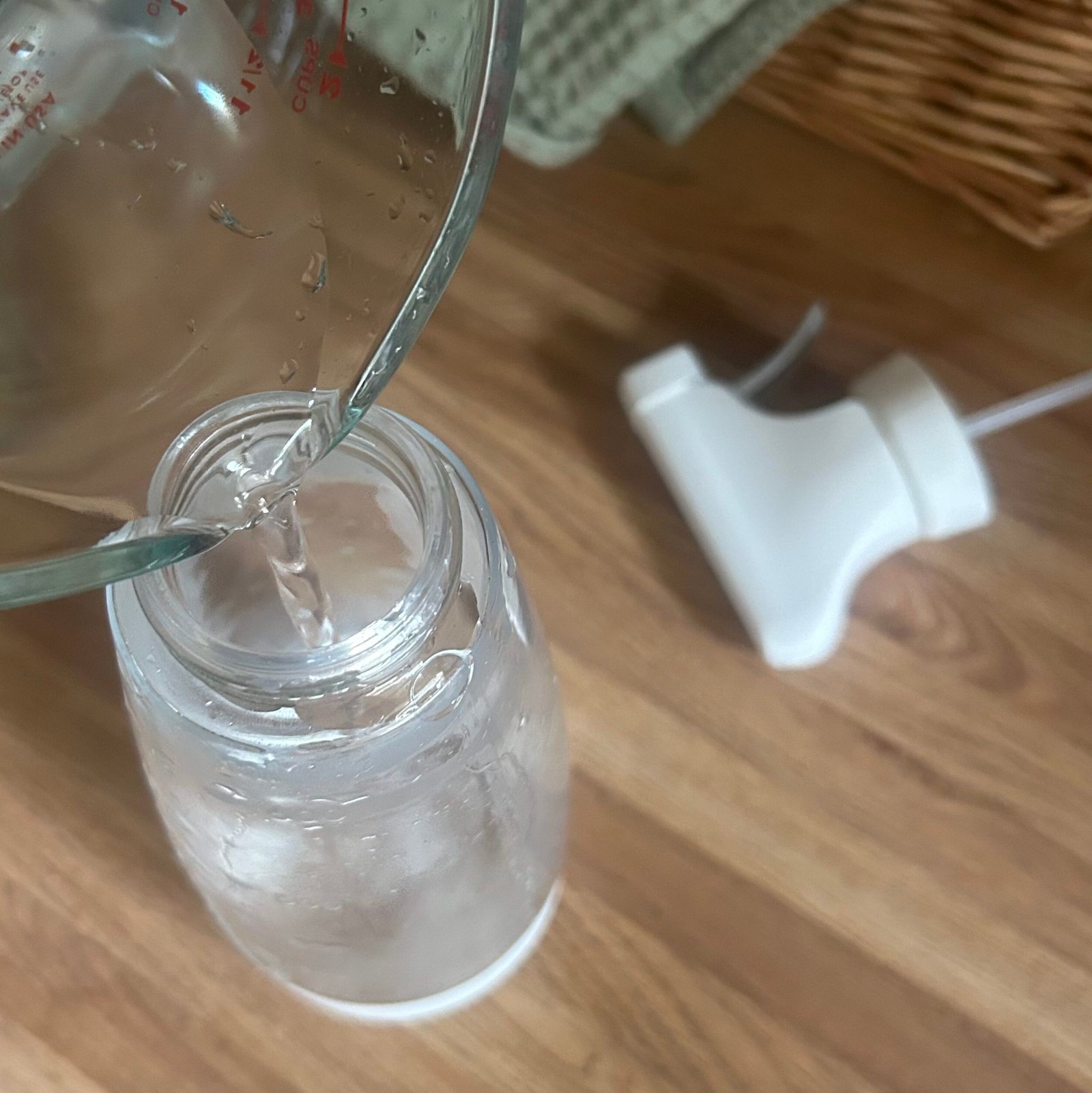
1. Add water to a clean spray bottle
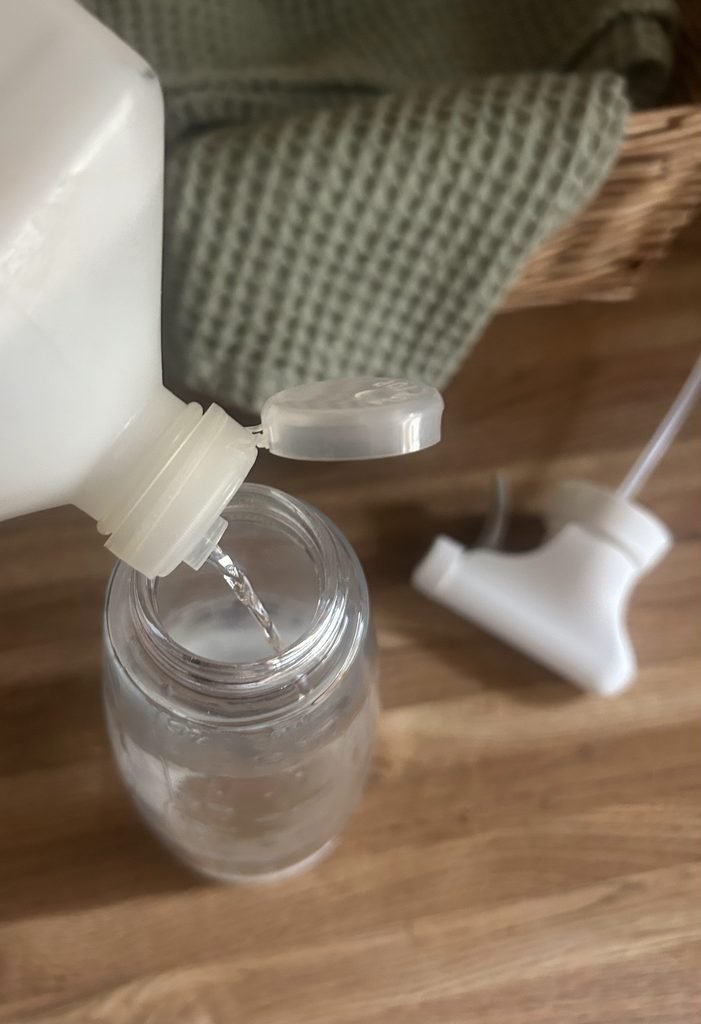
2. Add isopropyl alcohol
- (Optional) Add a few drops of essential oil.
- Shake gently to combine.
- Spray the surface until visibly wet.
Contact time (don’t skip this)
Contact time is very important if you want a homemade cleaner to be successful against bacteria and viruses. Make sure the surface stays visibly wet for 30 seconds to 1 minute before wiping or simply let it air dry.
Tips
- If you want to use this cleaner on glass (it works beautifully), use distilled water so you don’t leave streaks behind.
- Label your bottle! If you make lots of cleaners like I do its easy to get them mixed up.
- Essential oils can be tough on some plastics and may leave residue on certain surfaces. If you notice cloudiness or streaks, you can always skip the oils.
Safety notes
- Don’t use this on surfaces that can be damaged by alcohol (test a small area first).
- Keep away from heat/flames (isopropyl alcohol is flammable).
- Store out of reach of children.
- This is a simple DIY option, not an EPA-registered disinfectant. When you need a product with specific kill claims (certain viruses, mold, etc.), follow the label on an EPA-registered disinfectant for that use case.
References
ŞAHİNER, A., HALAT, E., & YAPAR, E. A. (2019). Comparison of bactericidal and fungicidal efficacy of antiseptic formulations according to EN 13727 and EN 13624 standards. Turkish Journal of Medical Sciences, 49(5), 1564–1567. https://doi.org/10.3906/sag-1906-53
Keen, J. N., Austin, M., Huang, L. S., Messing, S., & Wyatt, J. D. (2010). Efficacy of soaking in 70% isopropyl alcohol on aerobic bacterial decontamination of surgical instruments and gloves for serial mouse laparotomies. J Am Assoc Lab Anim Sci., 49(6), 832–837. PMID: 21205449; PMCID: PMC2994051
Centers for Disease Control and Prevention. (2023, November 28). Chemical disinfectants. U.S. Department of Health and Human Services. https://www.cdc.gov/infection-control/hcp/disinfection-sterilization/chemical-disinfectants.html
I’m so excited to try this! Thank you 😊.
Omg I’m making this today!! Thanks:)